
Audit Your Site Before You Optimize for AI Search
Stop guessing what's wrong with your website. Performance, security, SEO infrastructure, AI-readiness, and a prioritized fix list you can execute with us or anyone else.
AI search optimization
Visibility in ChatGPT, Perplexity, and AI Overviews is built on verifiable technical foundations. We audit against documented crawler behavior, not agency folklore, and grade every recommendation by the evidence behind it.
readiness report · evidence-graded
Raw-HTML contentverified
JSON-LD schemaverified
llms.txtpartial
Guaranteed AI rankingsfolklore
every recommendation graded by the evidence behind it
An AI Search Readiness Audit checks whether AI systems can crawl, render, and cite your site: raw HTML versus client-side JavaScript, JSON-LD schema validity, semantic structure, and indexability. It costs $1,500 fixed ($2,500 for large or e-commerce sites), ends in an evidence-graded remediation list, and an optional implementation sprint executes it from $2,500.
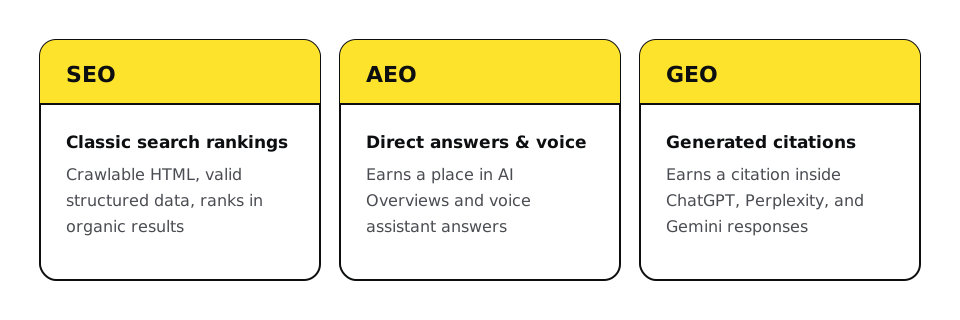
SEO earns rankings in classic search results; AEO (Answer Engine Optimization) earns your content a place in direct answers, from AI Overviews to voice assistants; GEO (Generative Engine Optimization) earns citations inside generated responses from ChatGPT, Perplexity, and Gemini. They share a technical floor: crawlable HTML, valid structured data, and content written so a machine can lift an answer from it. That floor is what the audit measures. Full glossary, including why AIO isn't worth building a strategy around, in the SEO vs AEO vs AIO vs GEO guide.
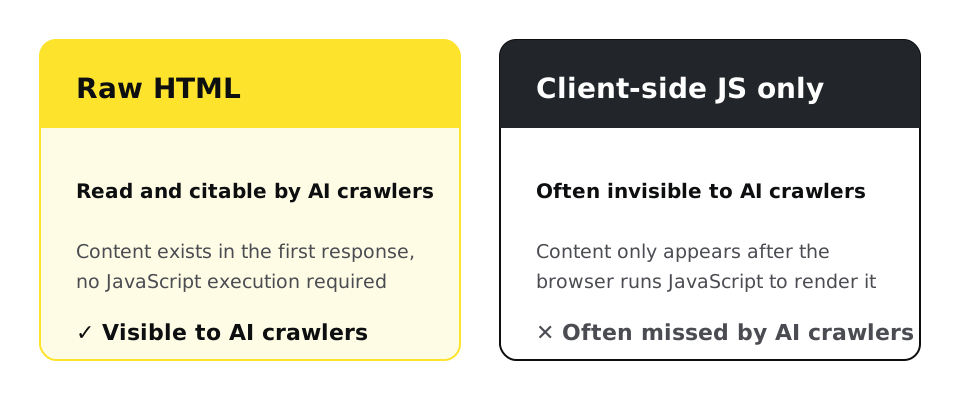
Make your content technically liftable and factually citable. AI crawlers mostly read raw HTML, so content rendered only by client-side JavaScript is often invisible to them. Cited pages tend to share traits: direct answers near the top, question-form headings, valid schema, and data that exists nowhere else. None of this is a hack; all of it is auditable. Full walkthrough in the guide on getting cited by ChatGPT and Perplexity.
Crawlability and rendering analysis (raw HTML vs client-side JS), JSON-LD schema validation, semantic HTML review, indexability report, an evidence-graded llms.txt recommendation, and a prioritized remediation list. Standard sites $1,500 fixed; large or e-commerce sites $2,500 fixed. The optional implementation sprint (quote, from $2,500) executes the list; the quote is driven by finding count, template count, and CMS constraints.
The relationship to the $795 Technical Audit: the audit's AI-readiness section is a screening pass; this product is the full evidence-graded version.

The honest answer is "unproven, and it costs almost nothing to have." llms.txt is a proposed convention, not a standard, and Google's documentation says no AI text files are needed to appear in AI Overviews or AI Mode. We've run one in production on a client platform since the convention appeared, which is why our recommendation is evidence-graded rather than hyped: we tell you what it demonstrably does, what's speculative, and whether your site should bother.
markdown · llms.txt (anonymized)
# llms.txt - production excerpt
> [Company] provides travel protection plans for US travelers.
> This file summarizes the site for AI systems. Canonical
> information lives at the URLs below.

## Key pages
- /plans/ : coverage tiers and what each includes
- /claims/ : how to file a claim, processing timelines
- /faq/ : answers to the most common coverage questions
The structure matters more than the file: short factual summary, canonical URLs, no marketing language. An AI system that reads it gets the same facts a human gets.
No. There is no secret prompt, meta tag, or paid trick that makes generative engines prefer your brand. What's real and verifiable: technical crawlability, structured data, answer-shaped content, and original information worth citing. If someone sells you guaranteed ChatGPT rankings, they're selling folklore. This is the audit's whole reason for grading evidence.

Most AI-search advice is folklore. The three vendors that matter publish what their crawlers do and what controls you have. Linked facts come from vendor documentation, checked 10 October 2026; unlinked cells are our description.
Sources, checked 10 October 2026
Stop guessing what's wrong with your website. Performance, security, SEO infrastructure, AI-readiness, and a prioritized fix list you can execute with us or anyone else.
Manual engineering against real-user field data, not another caching plugin. Fixed-fee diagnostic and remediation sprints measured against 28-day CrUX data.
Senior engineering judgment on demand: fixed-fee technical audits, one-hour strategy sessions, fractional CTO engagements, and custom application development & support.
A shorter, checklist-driven AEO screening for sites that need a quick read before the full audit.
In our audits, builder sites that lean on client-side rendering are the pattern most likely to hide content from AI crawlers.
Webflow renders mostly static HTML, but interactions and CMS collections still need a rendering check.
What actually gets a page lifted into a generated answer, beyond the audit checklist.
The same crawlable, well-structured content an AI Search Readiness Audit demands also powers a grounded assistant on your own site.
Why inconsistent name, address, and schema data confuses AI answer engines even when your content itself is technically sound.
Going deeper
GEO is optimization for being cited in AI-generated answers, and AEO is optimization for being the direct answer. They share the same foundation: crawlable pages, content in the raw HTML, answer-first structure, and original information worth citing. This service covers both, and the SEO vs AEO vs GEO guide has the definitions.
JSON-LD that exists in the raw HTML response, not injected after hydration. Organization, WebPage, and content-type nodes (Service, FAQPage, Article) matter most. If your schema only appears after JavaScript runs, it may be missing from what AI systems retrieve, because the crawler documentation from OpenAI and Perplexity does not promise JavaScript rendering. The audit tests exactly this.
Google's documentation says there are no additional requirements to appear in AI Overviews or AI Mode: a page needs to be indexable and eligible to show a snippet. Helpful content, a good page experience, and structured data that matches the visible text are the working levers. Nobody can guarantee placement; anyone who says otherwise is guessing.
Fetch your page the way a crawler does: request the raw HTML and see what's in it. If your content isn't in that response, it may be missing from what AI systems retrieve, since the vendor documentation does not promise JavaScript rendering. The audit does this per template and shows you the diff between what you see and what the machine sees.
A markdown file at your site root summarizing your content for AI systems, similar in spirit to robots.txt. It's a convention with uneven adoption, cheap to implement and honestly graded "promising, unproven" by our audits. We recommend it where the cost is near zero, and we say what it won't do.
Indirectly but really. Slow sites can get crawled less and rank worse in classic search, and Google says a page must be indexed to appear in AI Overviews. Speed is part of the technical floor, which is why the audit reports on it and why the CWV sprint exists.
It executes the audit's remediation list: schema fixes, rendering changes, semantic HTML corrections, answer-block restructuring. Priced by quote from $2,500, driven by the number of findings, templates, and what your CMS allows.
Evidence-backed: crawlability, raw-HTML content, valid structured data, answer-first formatting, original data. Folklore: guaranteed AI rankings, secret prompt tricks, keyword-stuffed "AI content", paying for citations. The audit grades every recommendation so you can see which bucket it's in.
Not as a standing product yet. The audit plus implementation sprint covers most needs; ongoing monitoring can be scoped through consulting. Compare any retainer offer on what is written down in the task list, not on the monthly fee.
AEO and AI search
The audit checks whether your content, schema, and infrastructure are actually readable by answer engines, not just search crawlers.