
Ongoing Next.js and Astro Operations Under a Retainer
Predictable monthly retainers that keep your website updated, secure, backed up, and monitored, on any platform, including custom PHP/CodeIgniter applications.
Platforms we support
Modern frameworks do not remove operations, they relocate them. Dependency upgrades, rendering strategy, and deployment discipline are the new maintenance, and they are what we run, including on this site, which is Astro.
For Next.js and Astro sites, Breezy Sites provides managed operations (dependency and framework upgrades, monitoring, deployment hygiene) from $97/month, performance work where the frameworks' defaults are not enough, and AI-crawler rendering fixes: the client-side-rendering visibility problem is most acute exactly on these stacks.
Framework majors, dependency security bumps, adapter and hosting changes, and the slow rot of an unmaintained lockfile. A Next.js site untouched for 18 months is a rewrite risk; one under retainer is an afternoon of upgrades at a time, on the Website Management page.

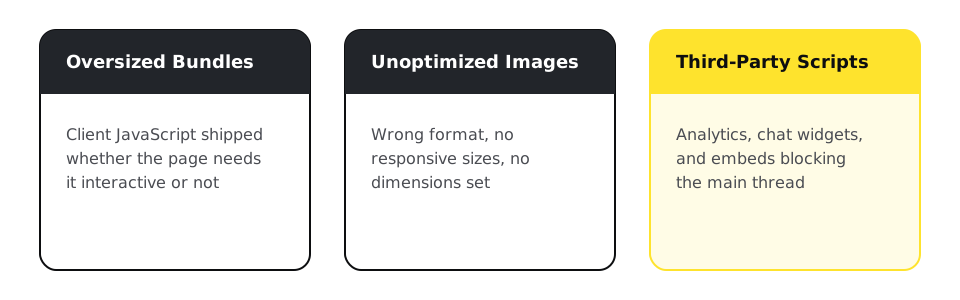
Next.js and Astro make fast possible, not automatic. Oversized client bundles, unoptimized images, and third-party scripts produce failing Core Web Vitals on the most modern stack. Field-data diagnosis and remediation work identically here, on the Core Web Vitals page.
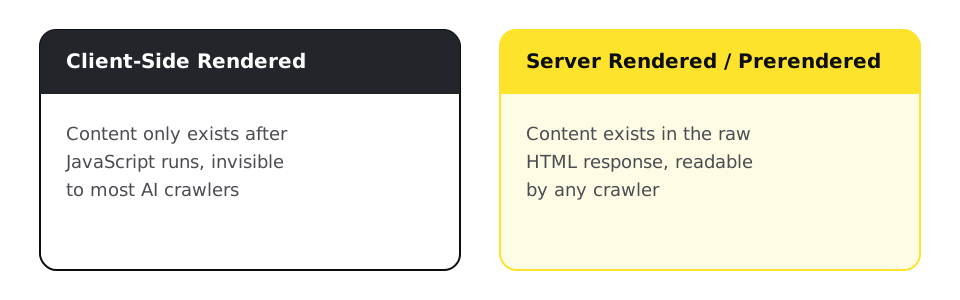
Client-side-rendered content is invisible to most AI crawlers, and React SPAs are where this bites hardest. Server rendering and prerendering the routes that matter is the fix, and checking this per template is a core item of the AI Search Readiness Audit. This site runs Astro static-first for exactly that reason.
A two-line excerpt from this site's astro.config.mjs, real, first-party:
javascript
output: 'static',
trailingSlash: 'always',
Static output means every route prerenders at build time, no server-rendered gap for a crawler to fall into.
Predictable monthly retainers that keep your website updated, secure, backed up, and monitored, on any platform, including custom PHP/CodeIgniter applications.
Manual engineering against real-user field data, not another caching plugin. Fixed-fee diagnostic and remediation sprints measured against 28-day CrUX data.
Evidence-graded audits of how ChatGPT, Perplexity, and AI Overviews actually see your site, documented crawler behavior, not agency folklore.
We take Lovable, v0, Bolt, and Replit projects from localhost to a live, secure custom domain: DNS, SSL, database, and all, usually within a week.
A direct performance comparison between the two frameworks we support most.
Where WordPress still wins, where Astro or Next.js wins, and the real migration cost and timeline.
Two paths off a slow WordPress site: a full migration to Astro, or headless WordPress with WPGraphQL feeding this stack.
Going deeper
Yes, that is most of the work: audit the repo and deployment, document, then own it. An abandoned Next.js codebase is recoverable far more often than teams fear.
Usually client bundle size, layout shift from undimensioned media, and third-party scripts. The framework's potential does not cap your site; your implementation does, and the diagnostic shows which parts.
Only what exists in the raw HTML response. If your content renders client-side, most AI systems never see it. The audit tests this per template and the fix is rendering strategy, not content.
Astro when content dominates and interactivity is islands; Next.js when the app dominates. If the app dominates enough to need its own backend, roles, and integrations, that usually is a custom application, not just a framework choice. We run both in production, and the comparison page covers it properly, for your case that is a Strategy Hour question.
Retainers from $97/month scoped to the repo and deployment; upgrades and performance work priced as sprints. Published pricing applies here like everywhere.
Platforms we support
The audit checks your Next.js or Astro build for the same three things: dependency health, Core Web Vitals, and whether AI crawlers can actually read the page.