
Fixing Shopify Core Web Vitals From App Bloat
Manual engineering against real-user field data, not another caching plugin. Fixed-fee diagnostic and remediation sprints measured against 28-day CrUX data.
Platforms we support
Shopify stores do not get slow on their own; apps make them slow. We do the app-bloat surgery that restores Core Web Vitals without deleting the tools your team depends on.
For Shopify stores, Breezy Sites does three things: app-bloat surgery that fixes Core Web Vitals by deferring app scripts instead of deleting apps (quoted from $2,500), managed maintenance from $97/month, and migrations into Shopify with products, customers, and rankings intact.
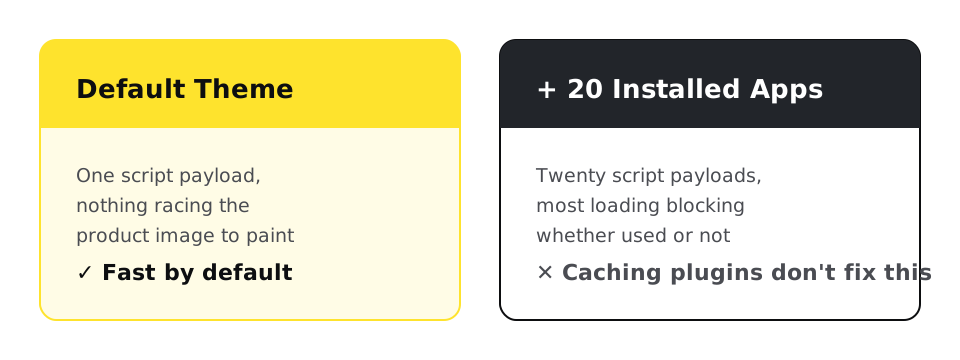
Each installed app injects its own scripts, and most load blocking whether or not the page uses them. Twenty apps is twenty script payloads racing your product image to the paint. The surgery: inventory which scripts actually block rendering, defer or conditionally load them, and verify in 28-day field data on the Core Web Vitals page.
Shopify handles hosting; someone still has to own theme updates, app compatibility, checkout health, and the accumulating small edits. Store maintenance joins the standard retainer tiers from $97/month on the Website Management page, with response times that step up by tier. The broader store retainer is described under ecommerce website management.

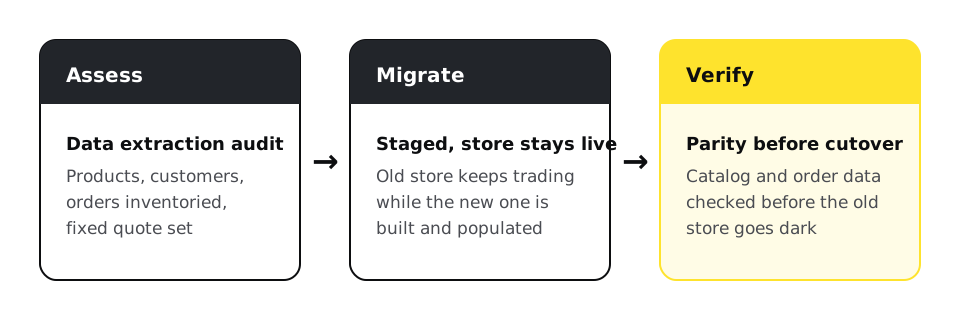
Migrations from Wix, WooCommerce, or Squarespace Commerce follow the assessment-first process: data extraction audit, fixed quote, staged cutover with the old store trading until parity is verified, on the Migrations page. The Wix-to-Shopify path has its own dedicated page.
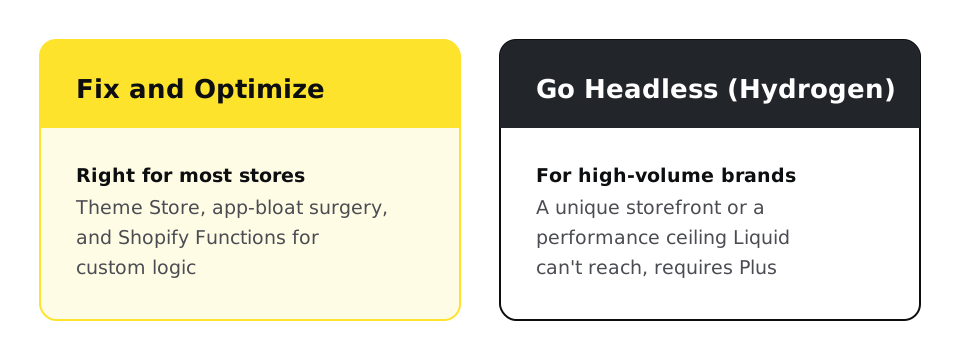
Fix it first, in most cases. For stores under roughly five million dollars a year in revenue, the Theme Store plus app-bloat surgery covers what a store actually needs, and Checkout Extensibility with Shopify Functions now handles a lot of the custom logic merchants used to reach for a headless rebuild to get. Going fully headless with Hydrogen makes sense specifically for high-volume brands that need a unique storefront experience or a performance ceiling Liquid themes cannot reach, and it requires Shopify Plus. The audit is what tells you which category your store is actually in before either path gets quoted. Full headless build support is on the Next.js & Astro page.
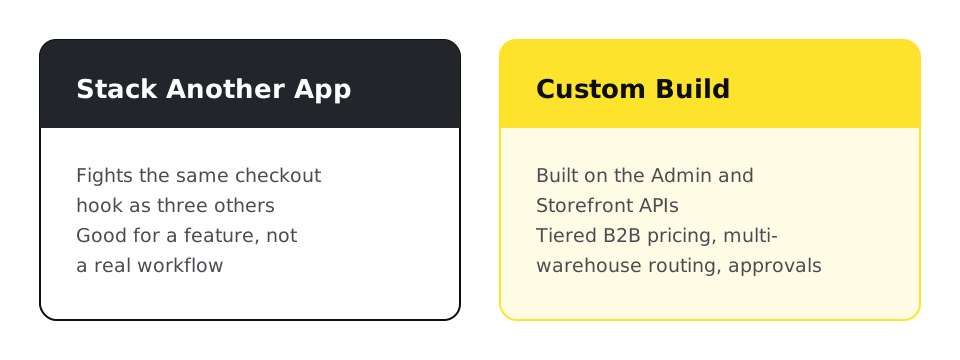
When the requirement is a workflow Shopify Functions and the app store were not built for: tiered B2B pricing across account types, multi-warehouse routing logic, or an approval chain between a quote and an order. Shopify's Admin and Storefront APIs make this practical to build against without leaving Shopify as the commerce backend, and it beats a stack of four overlapping apps fighting for the same checkout hook. What that build actually looks like is on the custom application platform page.
If traffic or conversions have stalled and you do not know why, a technical SEO audit finds the cause before you pay for fixes. The $795 Technical Audit covers a Shopify store the same way it covers any site: real-user performance data, security exposure, SEO infrastructure, and AI-readiness, ending in a written fix list ranked by business impact. What each check covers is on the audit specification page, and the technical SEO audit service page explains how the fee credits toward a sprint.

Manual engineering against real-user field data, not another caching plugin. Fixed-fee diagnostic and remediation sprints measured against 28-day CrUX data.
Predictable monthly retainers that keep your website updated, secure, backed up, and monitored, on any platform, including custom PHP/CodeIgniter applications.
Leave your platform, keep your rankings: full 301 redirect mapping, staged cutover, and 90-day post-migration rank monitoring, plus zero-data-loss AWS server and database migrations.
Grounded AI assistants built from your actual content, tested against wrong answers, capped with a token budget, and monitored in production.
Shopify import limits, redirect rules, and plugin replacement.
Hosting, payments, ownership, and data export, each fact dated and sourced.
Hosting lock-in, product export limits, and when to switch.
How Shopify compares to Squarespace for e-commerce specifically.
The exact process for moving a Wix store onto Shopify.
Going deeper
Usually yes: most app scripts can be deferred or conditionally loaded rather than removed. Some apps are genuinely unsalvageable, and the diagnostic names them with evidence before anything changes.
Shopify's infrastructure is fast; your theme and apps run on top of it. The score reflects what loads in the browser, and that part is yours, and fixably ours.
We modify and optimize existing themes; full theme builds are scoped case by case through consulting. Our specialty is making what you have perform, not selling a redesign.
Yes, catalog-aware semantic search and guided selling is a dedicated service, quoted from $6,500, with the details on the semantic search page.
Usually not first. Hydrogen makes sense for high-volume brands needing a unique storefront or a performance ceiling themes cannot reach, and it requires Shopify Plus. Most stores get further, faster, from app-bloat surgery and Shopify Functions on their existing theme.
When the need is a workflow, not a feature: tiered B2B pricing, multi-warehouse routing, or an approval chain between quote and order. Built against the Admin and Storefront APIs, that beats stacking another app onto an already-slow checkout.
Diagnostics $795, e-commerce speed sprints quoted from $2,500, maintenance from $97/month, migrations quoted after the $495 assessment. All published on the pricing page.
Platforms we support
The audit names which installed apps are actually slowing checkout down, with field data, before you uninstall anything.